Welcome to Sinkholes II - Immendingen
A unique natural phenomenon—the Danube’s underground flow in the Donaubergland region: The Danube flows into two oceans: above ground into the Black Sea, and underground to Lake Constance and from there into the North Sea. There are several points where the river sinks underground.
Cologne lies on the Danube, and Vienna lies on the Krähenbach?
We all learned in school: “The Danube flows into the Black Sea”—but that doesn’t apply to the entire Danube. Because between Immendingen and Tuttlingen in the Donaubergland, a large portion of the Danube’s water sinks and seeps away. And here in the Immendingen field “Im Brühl,” there are several sinkholes right in the riverbed.
A (large) amount of water constantly flows underground all the way to the Aach spring in Hegau. From there, when it is forced to the surface via the Aachtopf, it flows through the Radolfzeller Aach into **Lake Constance. From Lake Constance, it** continues its long journey via the Rhine and the Rhine Falls. This is how the water of the Danube, together with the water of the **Rhine**, reaches the North Sea.
In a sense, Cologne, Bonn, Düsseldorf, and many other cities are also located on the Danube!
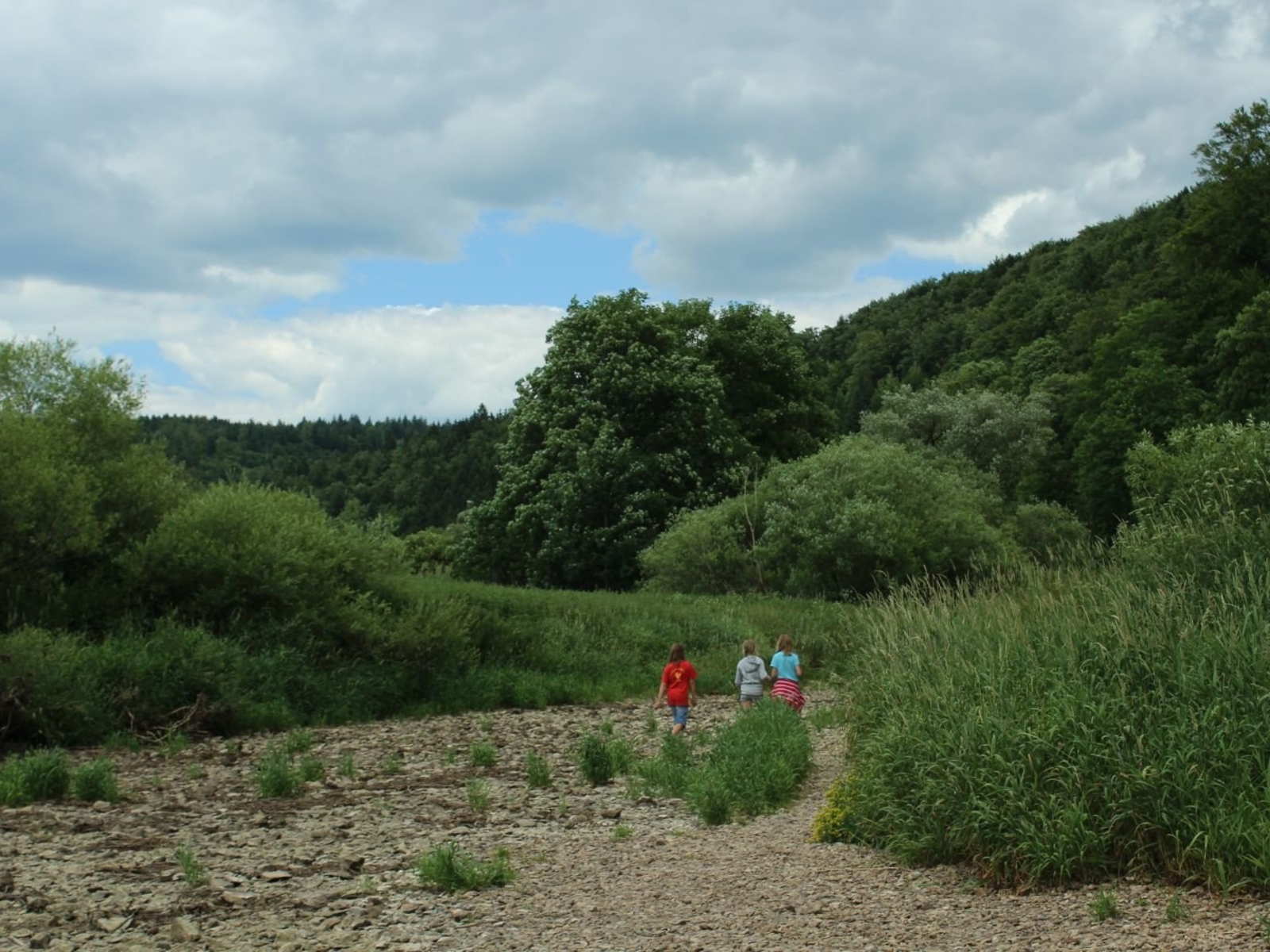
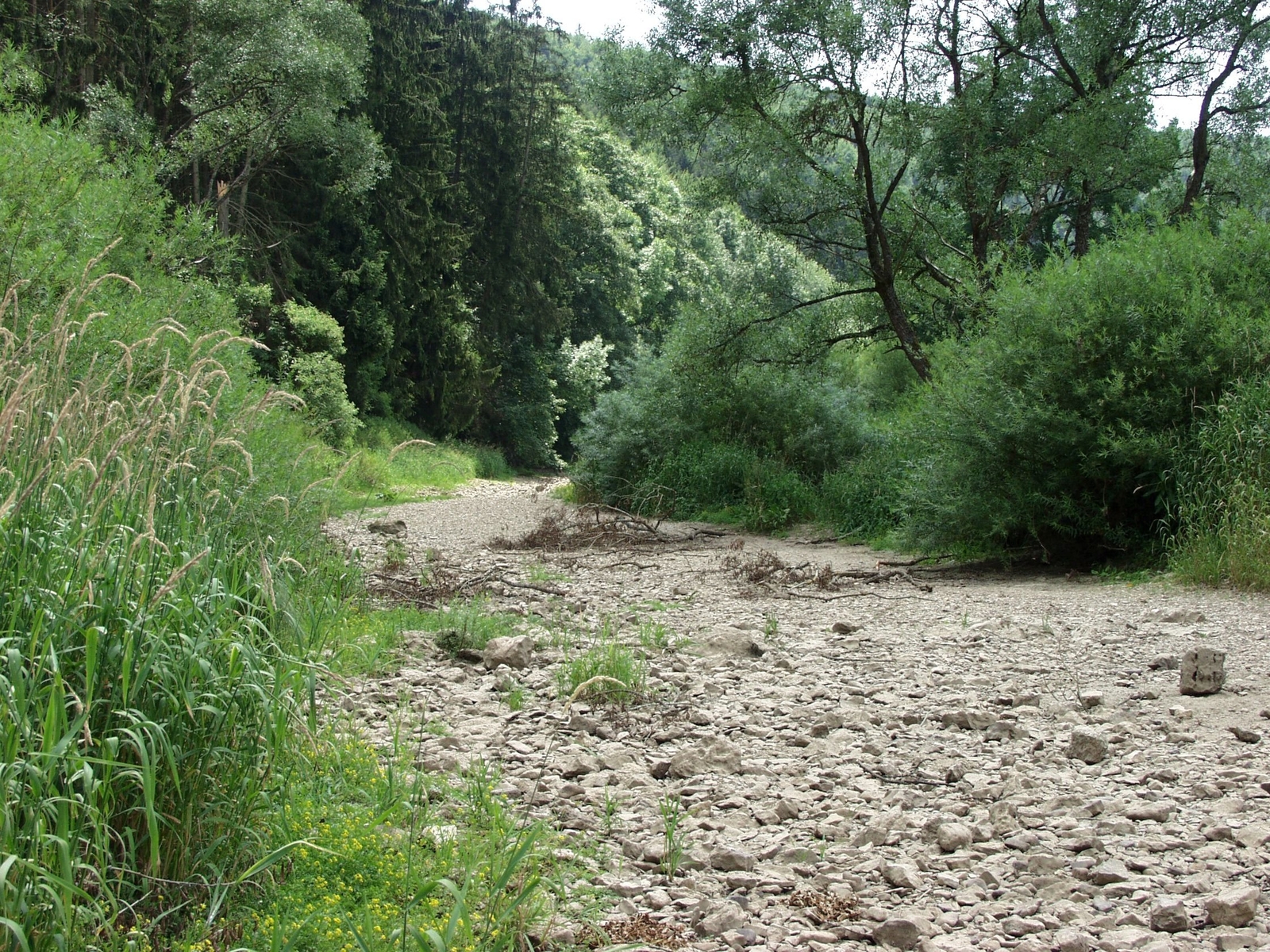
In summer, the riverbed of the Danube in this section between Immendingen and Tuttlingen-Möhringen in the Donaubergland region is dry for weeks on end. You can then hike through the Danube on dry land along the [Premium Trail: Danube Sinkhole](https://www.donaubergland.de/wandertouren-details/donauwelle-donauversinkung/).
But doesn’t that also mean: In summer, Vienna isn’t on the Danube, but perhaps on the Krähenbach, the Danube’s nearest tributary near Möhringen?
The Danube Sinkhole is an official geopoint of the [UNESCO Global Geopark Swabian Alb](https://www.geopark-alb.de/geopark-erleben/reise-in-die-erdgeschichte/).
Source: DZT Knowledge Graph